
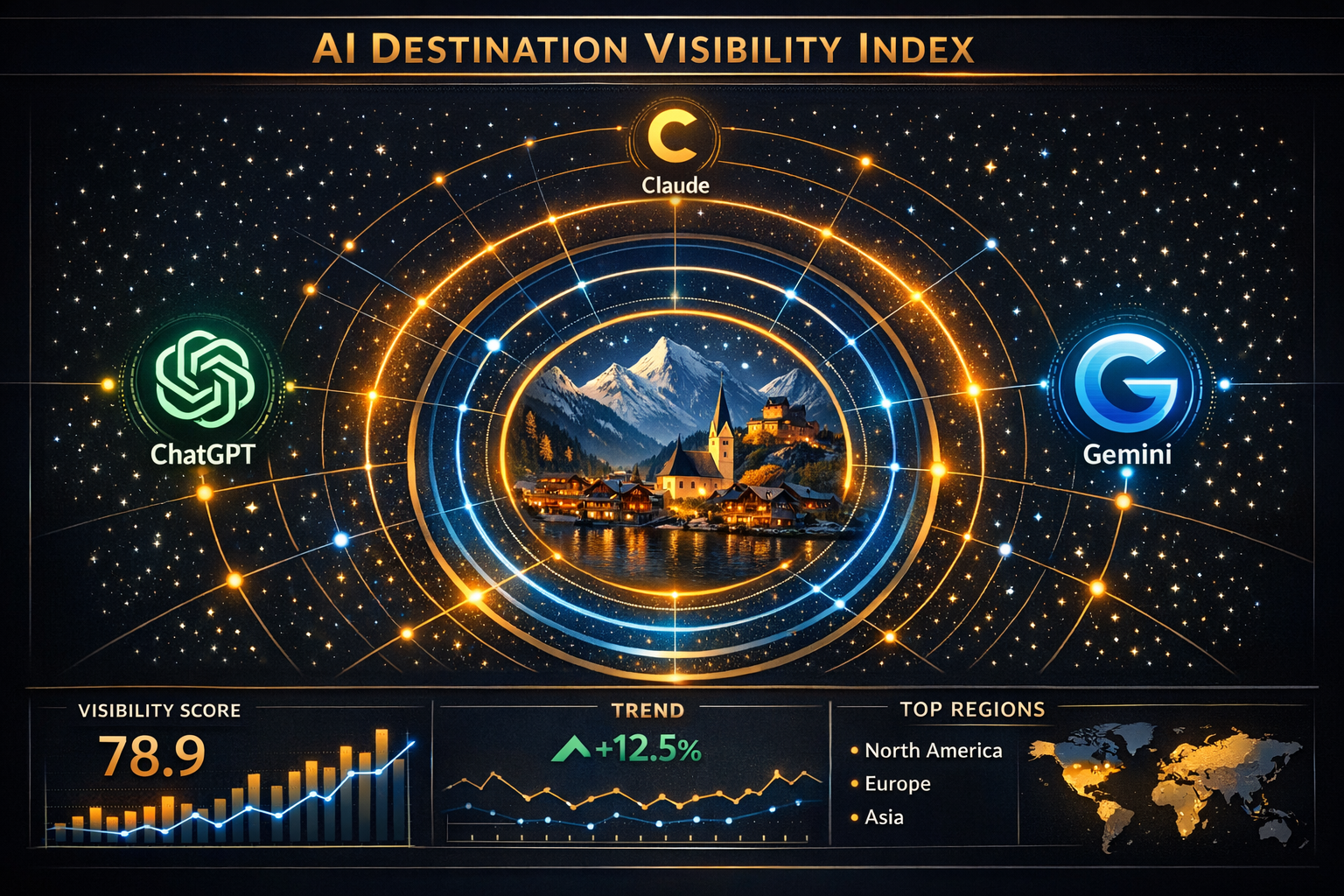
Traditional marketing strategies fail when travelers increasingly plan vacations through generative AI models like ChatGPT or Gemini instead of classic search engines. Destination Management Organizations (DMOs) face a critical blind spot: they cannot measure their algorithmic visibility or actively control the narratives being distributed about them. The ADVI (AI Destination Visibility Index) closes this knowledge gap by systematically analyzing a destination’s presence in leading AI systems and scoring it in a measurable index. It delivers actionable strategic recommendations and a control matrix to deliberately influence algorithmic memory and secure competitive advantages in the new era of travel planning.
The Way We Plan Travel is Changing Radically
Where classic search engines and travel guides once dominated, generative language models like ChatGPT, Claude, and Gemini are increasingly taking the role of digital travel advisor. For DMOs, this raises a completely new, mission-critical question: How visible is my destination in the “memory” of AI?
According to recent studies, 46% of Gen-Z travelers plan to use AI tools for vacation planning in 2026. To make this algorithmic black box transparent, the ADVI was developed. It is the first data-driven analytical tool to systematically measure and evaluate the algorithmic presence and perception of tourism destinations.
More Than Just a Ranking: The Anatomy of Visibility
Visibility in the world of artificial intelligence means far more than mere mention. The ADVI analyzes a destination’s positioning across five core dimensions.
It measures whether a region appears as a top recommendation or a footnote (positioning) and how consistently answers align across different models like OpenAI, Anthropic, and Google (model consistency). Particularly compelling is thematic diversity: Which narratives and attributes does AI associate with your destination? Are your core strategic themes—what you actually want to stand for—reflected by the algorithms? The ADVI makes this gap between self-image and AI-perceived image measurable for the first time.
A Deep Look in the Mirror: Identity and Competition
The analysis delivers far more than abstract numbers. The AI Identity Profile reveals what image AI constructs of your destination. Often, algorithmic perception deviates surprisingly sharply from intended positioning. This is where the ADVI intervenes, uncovering strategic gaps.
The USP Visibility Analysis then examines international competition: Who are your true rivals when competing for specific themes like adventure travel, culture, or sustainability? Because the index is based on over 225 API calls per analysis, it provides reproducible data rather than mere snapshots.
Why Algorithmic Visibility Cannot Be Left to Chance
Tourism marketing faces a new competitive dimension. When AI systems increasingly influence travel decisions, algorithmic visibility becomes a standalone success factor. The ADVI offers not merely a status-quo assessment, but functions as a regular monitoring instrument. Trends become visible, and the impact of marketing efforts can be directly tracked in digital perception. Results are immediately actionable.
The Deliverables: Your Strategic Toolkit
At the end of the process stands not merely a document, but a strategic toolkit for DMOs and tourism boards:
- ADVI Report: 70–80 pages with 30+ sections featuring graphics and strategic interpretation
- Control Matrix: Concrete action recommendations including budget estimates and KPIs
- Executive Briefing: Key findings distilled for decision-makers
- Visualizations: Radar charts, heatmaps, and more that make complex data immediately comprehensible
Take the First Step
The ADVI was developed to make the new reality of tourism marketing manageable. Because only those who understand how AI “thinks” about their destination can actively shape that perception and secure their position in the digital travel plans of the future.
Curious? Want to discover how your destination currently stacks up against your key competitors? I’d be happy to help you outline the first steps for an AI visibility analysis.
No responses yet